SS Business Development ServicesProf. Sunil Somarajan

Management training
for MSMEs.

Entrepreneur development, hospitality business development, trainer development and food-safety practices.

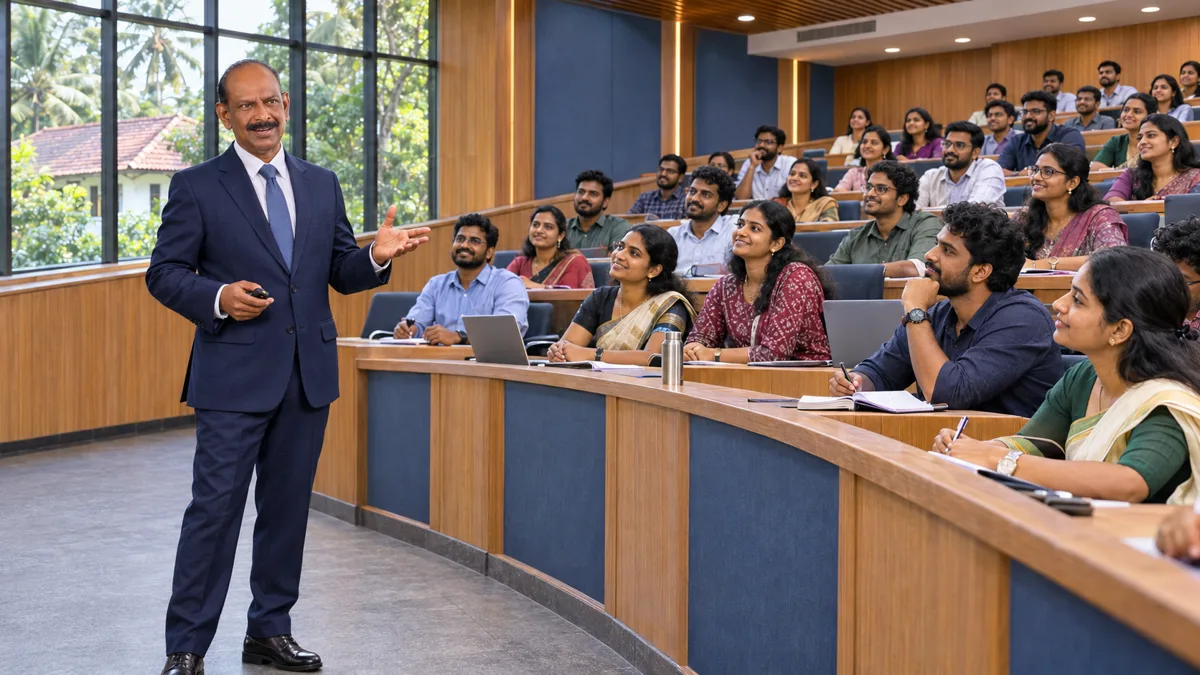
Illustration of Prof. Sunil Somarajan addressing students in a lecture theatre
Training hall illustration based on Prof. Sunil Somarajan’s photograph.

Start and Improve
Your Business.

The International Labour Organization (ILO) developed SIYB as a system of interrelated business-management training packages and supporting materials for micro and small enterprises.

SIYB follows the progressive stages of enterprise development: Generate Your Business Idea (GYB), Start Your Business (SYB), Improve Your Business (IYB), and Expand Your Business (EYB). Sunil Somarajan’s listed training programmes cover GYB, SYB and IYB.

GYB

Generate your business idea.

Turn your interests, experience and market observations into a business idea worth exploring.

  • Explore your strengths and business opportunities
  • Compare ideas against real customer needs
  • Choose an idea to develop further
Discuss this programme ↗
GYB

Generate Your Business Idea

How to select the business idea best suited to you.

Enquire about GYB↗Original programme PDF ↗Ask about GYB on WhatsApp
Who is it for?
People who want to start a business but are unsure which idea to pursue.
Duration
2–3 days · 12–18 hours

Identify different business ideas, analyse them and select the most promising one. The programme helps potential entrepreneurs develop a clear idea of the business they are preparing to start.

What you will learn

  • Assess whether you have the basic requirements to become an entrepreneur.
  • Identify different business ideas.
  • Analyse opportunities through field study and SWOT analysis.
  • Select and develop the most promising business idea.

A certificate is issued on successful completion. Programme duration depends on participants’ entry level and the agreed delivery.

Complete GYB programme information

Generate Your Business Idea(GYB)

TRAINING PROGRAM

“Generate Your Business Idea” is a training programme for people who want to start a business but are not sure of the business idea to pursue. It assists potential entrepreneurs to identify different business ideas, to analyse them and select the most promising one.

What is this training about?

The core focus of this training is” How to select the best business idea suitable for you”. The training will help potential entrepreneurs to identify different business ideas, to analyse them and select the most promising one so as to have a clear idea of the business you prepare to start.

For whom ?

This training programme is for people who want to start a business but are not sure of the business idea to pursue or will be doubtful in the success of the business

How will you benefit from this course?

  • On successful completion of this course, you should be able to Assess whether you have the basic requirement needed to be a successful entrepreneur Identify different business ideas Analyse the business ideas and select the best idea to start your own business

After successful completion of the course a certificate will be issued

SYB

Start Your Business

How to turn a concrete idea into a business plan.

Enquire about SYB↗Original programme PDF ↗Ask about SYB on WhatsApp
Who is it for?
People with a practical business idea who want to start a new business.
Duration
5 days · 30–40 hours

A combination of training, field work and post-training support. Explore the steps of starting a business, test entrepreneurial skills in a simulated environment and develop a detailed business plan.

What you will learn

  • Assess your readiness to start a business.
  • Explain the purpose and contents of a business plan.
  • Consolidate your business idea.
  • Translate the idea into a completed business plan and evaluate its viability.

A certificate is issued on successful completion. Programme duration depends on participants’ entry level and the agreed delivery.

Complete SYB programme information

START Your Business (SYB)

TRAINING PROGRAM

“Start Your Business” training programs can be incredibly beneficial if you’re looking to take the leap into entrepreneurship. Here’s why they might just be the ticket to launching your successful start-up:

What is this training about?

The core focus of this training is “How to start a business”. This training will provide an opportunity to test your required entrepreneurial skills in a simulated and safe environment. The training will help to understand the proper steps for starting a business, the components of a business plan and help you to develop a detailed business plan enabling you to actually get started.

For whom ?

This training programme is for people who have a practical business idea and want to start a new business

How will you benefit from this course?

  • On successful completion of the course, you should be able to Describe the content of a business plan Consolidate your business idea Translate your business idea into a completed business plan Assess your readiness for starting your business

After successful completion of the course a certificate will be issued

IYB

Improve Your Business

How to improve the performance of an existing business.

Enquire about IYB↗Original programme PDF ↗Ask about IYB on WhatsApp
Who is it for?
Owners and managers of existing small enterprises.
Duration
7 days · 42–56 hours for all six modules

Develop a systematic approach to operating a business, increasing sales and reducing costs. The six modules may be taught individually or combined as a complete course.

What you will learn

  • Marketing: attract and retain customers and use the marketing mix.
  • Costing: identify costs and calculate the cost of goods and services.
  • Buying & stock control: improve purchasing, supplier management, stock cards and stocktaking.
  • Record keeping: identify important records, maintain a simple system and use the information.
  • Planning for your business: develop plans and use them to improve operations.
  • People & productivity: recruitment, motivation, a safe workplace, productive culture and external relationships.

A certificate is issued on successful completion. Programme duration depends on participants’ entry level and the agreed delivery.

Complete IYB programme information

IMPROVE Your Business (IYB)

TRAINING PROGRAM

IYB stands for “ Improve Your Business, ” which is a training course designed to help entrepreneurs and small business owners enhance their business skills. The IYB course is a part of the SIYB training package which provides a systematic approach in operating a business. IYB can help you to become more efficient and increase your profit once you have started your business.

What is this training about?

The core focus of this training is “How to improve the performance of your business”. It will train you to on how to sustain your business by increasing sales and reducing costs. IYB training programme consist of six core areas required for business sustainability-

(i)  Marketing

(ii) Costing

(iii) Buying & stock control

(iv) Record keeping

(v) Planning for your business and

(vi) People & Productivity

For whom ?

Owners & Managers of small enterprises

How will you benefit from this course?

  • Marketing module will focus on how you can increase sales by attracting and retaining customers and increasing business profits in the long term.
  • The Costing module will focus on how you can calculate the cost of the goods or services offered by your business.
  • The Buying & Stock control module will focus on the purchasing procedures and inventory management in order to make business investment efficient.
  • The Recordkeeping module will focus on how you can identify records that are important for your business, how to keep the records ad how to use them to  improve business performance
  • The Planning for your business will focus on how you can run your business more efficiently if you prepare plan for the different areas of operation.
  • The People & Productivity module will focus on how you can increase the business productivity by following better recruitment procedures, adequately motivating and rewarding your employees and maintaining good relations with your suppliers and the community in which you operate.

After successful completion of the course a certificate will be issued

The IYB
management modules.

Six areas for business sustainability. Each can be taught individually or combined in the full IYB course.

Marketing

Understand customers, create loyalty, position products and services, and use the marketing mix.

Costing

Identify business costs and use records to calculate the cost of goods or services.

Buying & stock control

Plan purchasing, manage suppliers, create stock cards and carry out stocktaking.

Record keeping

Choose the records your business needs, maintain a simple system and use the information to improve performance.

Planning for your business

Understand the benefits of planning, develop business plans and use them in day-to-day operations.

People & productivity

Select and motivate people, identify productivity indicators, build a safe workplace and a productive culture, and maintain external relationships.

Read the complete business-management outline

Business Management

Start and Improve Your Business(SIYB) is the World's Largest Business Management Training Program developed by the International Labour Organisation (ILO)

The International Labour Organization (ILO) is one of the first and oldest specialised agency of the  United Nations founded in 1919, with a mandate to advance social & economic justice, promoting decent work  and setting international labor standards, especially for Micro, Small and Medium Enterprises (MSME).

The SIYB programme is a business management training programme with a focus on starting and improving small businesses meant for owners and managers of enterprises. SIYB is for potential entrepreneurs who want to start a small business and for existing entrepreneurs who want to improve their business.

Entrepreneurship Development

  • Assess the attributes required for a successful entrepreneur
  • Assist potential entrepreneur to identify different business idea
  • Guide potential entrepreneur to analyze business ideas through field study & SWOT analysis
  • Facilitate potential entrepreneur to concretise the business idea.
  • Assess the readiness to start the business
  • Brief the relevance of a business plan
  • Describe the content of a business plan
  • Facilitate potential entrepreneurs to create a business plan
  • Translate the business idea into a complete business plan.

People and Productivity

  • Explain the link between people and productivity as well as the link between people and competitiveness
  • Identify the key productivity indicators of your business and the factors that influence them
  • Select the right people for your business
  • Motivate people to become more productive
  • Build a safe and healthy workplace
  • Define a productive workplace culture
  • Identify and solve the problems of troubled employees
  • Maintain good external relations in order to support your business.

Planning for your business

  • Explain the benefits of business planning
  • Describe the steps of making business plans
  • Develop plans for your business
  • Use the plans to improve your business

Costing

  • Identify the different types of costs for running a business
  • Use the information from your business record books to calculate the cost of your goods or services
  • Use the product costing to calculate the cost of a good or service

Buying and Stock Control

  • Identify the items that your business needs to purchase
  • Design a process to make sure that you are buying well.
  • Verify whether or not stock control is important to your business
  • Create stock cards to record like stock coming in and going out of your business
  • Do stock taking to regularly check the level of your inventory.
  • Properly manage the performance of your suppliers.

Record Keeping

  • Explain the benefits of record keeping
  • Determine which records are important and should be kept
  • A simple system of keeping records
  • Use records to improve your business

Marketing

  • Explain the power of customers to your business
  • Identify how marketing helps you create customer loyalty
  • Project a good image of your good or service in the minds of the customers
  • Use the marketing mix to consistently build a positive image for your business.

Entrepreneur Development

  • The SIYB programme is a system of inter-related training packages and supporting materials for MSME entrepreneurs to start and grow their businesses.
  • The SIYB programme is structured into four separate training packages – Generate Your Business Idea(GYB), Start Your Business (SYB), Improve Your Business (IYB) and Expand Your Business (EYB) which are designed to respond to the progressive stages of business development.
  • Generate Your Business Idea (GYB) is intended for people who would like to develop a viable business idea. A GYB course typically lasts for 2 – 3 days (12-18 hours).
  • Start Your Business (SYB) is for potential entrepreneurs who want to start a small business and already have a concrete business idea. The programme is a combination of training, field work and post-training support. The training enables potential entrepreneurs to prepare a business plan, evaluate its viability and helps participants assess their readiness to start a business. SYB courses are usually delivered in 5 days (30-40 hours).
  • Improve Your Business (IYB) introduces already practicing entrepreneurs to good principles of business management. Its six modules (marketing, costing, buying & stock control, record keeping, planning for your business and people & productivity) can be taught individually or all combined in a full course. If the full course using all modules is delivered, its duration is approximately 7 days (42-56 hours).

Business management is a broad field that involves the planning, organization, directing, and controlling of business activities to achieve organizational goals. Here’s a compact guide to key concepts and components that are often associated with business management:

In practice, business management is not limited to just managers or business owners; it is integrated throughout an organization and involves continuous learning and adaptation to stay competitive in a rapidly changing environment. It blends analytical thinking with effective communication and leadership skills to drive the success of a company.

Hospitality
business development.

The ILO’s Small Business Competitiveness (SBC) programme provides start-up and operating guidance for tourism and hospitality enterprises. It uses the Community-Based Enterprise Development (C-BED) approach, focusing on marketing, financial management and action planning.

C-BED for Aspiring Entrepreneurs introduces business development and operation, including for audiences with limited literacy. C-BED for Small Business Operators helps existing owners and managers improve competitiveness.

Entrepreneurship Development in Tourism

  • Generate and select a business idea using SWOT analysis.
  • Create a marketing plan.
  • Calculate business costs and set prices for products or services.
  • Identify characteristics of successful businesses and create an action plan.

Good Business Practices for Small Hotels

  • Create a management system and set room rates.
  • Identify costs and prepare budgets.
  • Develop loyal employees and consistent service standards.
  • Create a safe workplace and develop an action plan.

Good Business Practices for Homestay

  • Develop a management system.
  • Prepare an operating budget and pricing strategy.
  • Manage human resources and improve service.

Good Business Practices for Restaurants / Food Vendors

  • Prepare an opening budget and pricing strategy.
  • Manage kitchen operations and human resources.
  • Create a safe and healthy workplace.
  • Build a reputation through customer service and develop an action plan.

Be the Winner in Restaurant Business

  • Develop a business plan for your restaurant concept.
  • Manage front-of-house and back-of-house operations.
  • Build memorable customer experiences.
  • Work through the operational challenges of a restaurant business.

Participants share their experience and leave with a priority action plan, including at least three actions to improve their business. SBC courses typically take 2–3 days (12–18 hours), depending on entry level.

Enquire about hospitality training ↗
Complete SBC and C-BED programme information

Hospitality Management

The International Labour Organization (ILO) has designed a unique training program called Small Business Competitiveness Programme (SBC)for Tourism & Hospitality Sector. This program uses a facilitation approach to enhance hospitality skills, fostering empowerment and better communication within local communities to improve living standards, productivity, and work environments.

Centering on two key training modules, the SBC program aims to nurture essential skills for initiating and managing a business, emphasizing marketing, financial oversight, and strategic action planning. It offers specialized tracks: one for those looking to start their entrepreneurial journey, titled C-BED for Aspiring Entrepreneurs, and another for current small business owners, referred to as     C-BED for Small Business Operators.

  • Guide to generate business idea
  • Select the business idea through SWOT analysis
  • Create a marketing plan
  • Facilitate calculating business cost to set price for the product or service
  • Identify characteristics that make business successful.
  • Create an action plan
  • Assist in creating a management system
  • Practice in setting price (room rate)
  • Guide in identifying various costs and create budget
  • Facilitate in developing loyal employees
  • Assist in ensuring consistent service standards
  • Identify method to create a safe working environment
  • Develop Action Plan
  • Create management system to improve business
  • Facilitate in preparing an operating budget & pricing strategy
  • Assist in managing human resource
  • Guide in improving service
  • Facilitate preparing on opening budget or pricing strategy
  • Guide in managing kitchen operations
  • Create safety & health in the workplace
  • Assist in managing human resource
  • Guide in building reputation through customer service
  • Develop Action Plan
  • Develop a business plan tailored to your unique restaurant concept.
  • Gain invaluable skills in managing both front and back of house operations.
  • Build a foundation for creating standout customer experiences
  • Learn how to navigate the challenges of the restaurant industry with confidence.

Hospitality Business Development

  • ILO have developed Small Business Competitiveness (SBC) training programme to support micro and small enterprises in the tourism & hospitality sector
  • SBC is based on the ILO Community-Based Enterprise Development(C-BED) approach to support the  potential / existing entrepreneurs to learn by themselves or through facilitation method.
  • The C-BED programme is structured around two core training packages designed to develop competitiveness for business start-up and operation through a focus on marketing, financial management and action planning. There are C-BED for aspiring entrepreneurs and C-BED for small business operators.
  • C-BED for Aspiring  Entrepreneurs is an introductory training that is suitable for audiences with very limited literacy who wants to gain basic familiarity with business development and operation.
  • C-BED for small business operators aims to help existing entrepreneurs address the challenges they face and improve their competitiveness. C-BED for Small Hotels, C-BED for Homestay, C-BED for Restaurants & Food Vendors is a management package meant to help owners and managers of small hotel, homestay, restaurant & food vendors respectively to improve the management of their business enterprise. It focuses on key management principles to build on from what participants already know from managing their hotel/ home stay/ restaurants & food vendors and helps them to learn more. Participants bring experience to share and leave with a priority action plan (atleast 3 actions to introduce improvements to their business)

Hotel management is a field that deals with overseeing the administrative tasks of a hotel or resort. Your goal as a hotel manager is to ensure all facilities are functioning smoothly, guests are satisfied, and staff are performing their duties effectively and efficiently

Trainer
development.

For subject-matter experts entering the training field, experienced trainers, corporate trainers and HR professionals. Develop the skills to identify needs, design, develop, deliver and evaluate training.

Learning principles

Adult learning theory, learning preferences, behaviourism, cognitivism and constructivism.

Programme design

Training-needs analysis, measurable learning objectives, curriculum development and the ADDIE model.

Delivery & facilitation

Presentation skills, voice and pacing, facilitation, group dynamics, participation and storytelling.

Engagement & evaluation

Hands-on learning, simulations, role-play, feedback and gamification, connected to learning outcomes.

Training of Trainers (ToT) courses

Enquire about trainer development ↗
Complete training-management outline

Training Management

Training management involves developing, delivering, and supervising training programs within organizations to improve skills, enhance productivity, and promote career development among employees. To effectively manage training, here are key steps and tips:

Businesses now widely acknowledge the pivotal role of training in enhancing staff performance, boosting productivity, and keeping up with advancements in technology and management. As the training sector grows, particularly in the developing world, there is a noticeable shortage of professionally qualified trainers. The training process comprises identifying needs, designing, developing, delivering, and evaluating the training.

Consequently, it is our mission to establish a pool of professional trainers capable of delivering effective training programs. Additionally, current trainers must continuously advance their skills and knowledge to keep pace with the rapid technological and managerial innovations.

Trainer Development

  • Understanding Learning Principles
  • Adult Learning Theory: Understand how adults learn differently than children.
  • Learning Styles: Recognize that individuals have different learning preferences.
  • Behaviorism, Cognitivism, Constructivism: Explore various educational psychology theories.
  • Designing Training Programs
  • Training Needs Analysis: Assess the gap between current and desired performance.
  • Learning Objectives: Define clear, measurable goals for the training.
  • Curriculum Development: Develop content that is informative and engaging.
  • Instructional Design Models: Use models like ADDIE (Analysis, Design, Development, Implementation, Evaluation) to structure training.
  • Delivery Techniques
  • Presentation Skills: Enhance skills for in-person or virtual delivery, considering voice, pacing, and engagement techniques.
  • Facilitation Skills: Learn to guide discussions, manage group dynamics, and encourage participation.
  • Storytelling: Use stories to make training memorable and impactful.
  • Engaging and Motivating Learners
  • Interactive Learning: Create opportunities for hands-on learning, simulations, and role-play.
  • Feedback Mechanisms: Incorporate regular constructive feedback.
  • Gamification: Use game design elements to increase engagement and motivation.

By following these steps, you can manage an effective training program that empowers employees, supports organizational objectives, and adapts to the evolving educational needs of the workforce.

Food-safety
practices.

Sunil Somarajan is a certified FoSTaC trainer. The programme range addresses food-safety knowledge and its application in food-handling environments.

Handling & hygiene

Foodborne illnesses, safe food handling, temperature control, personal hygiene and illness policies.

A safe food environment

Cleaning and sanitisation, pest control, food storage and legal responsibilities.

Listed food-safety courses

Enquire about food-safety training ↗
Complete food-safety outline

Food Safety Management

Food Safety Management is a crucial aspect of the food industry aimed at ensuring that the food provided to consumers is safe and of high quality. It involves a systematic approach to handling, preparing, and storing food to prevent foodborne illness and contamination. Key components of a Food Safety Management System (FSMS) typically include:

Food Safety Practices

  • Understanding Foodborne Illnesses:
  • The Nasty Bunch – Meet bacteria, viruses, and parasites, the not-so-friendly microscopic critters that can spoil the food party.
  • Safe Food Handling:
  • Clean Scene – Find out why washing your hands is like the superhero move in the battle against germs.
  • Temperature Control:
  • Personal Hygiene:
  • Dress Code for Success – Suit up with the proper gear to protect food from the most unpredictable element: us.
  • Illness Policy – Feeling sick? Know when to call in and say, “Food world, I’ll save you another day!”
  • Cleaning and Sanitization:
  • Disinfecting Duel – Wipes and sanitizers join forces to ensure surfaces are not just clean but food-safety epic clean.
  • Pest Control:
  • Bug Battles – Block the bugs. Deny the rodents. Learn strategies to keep pests out and ensure they don’t invite themselves to dine in.
  • Food Storage:
  • Order in the Fridge – Pack your fridge like a puzzle, where every piece has its place and there’s a place for every piece.
  • Legal Responsibilities:
  • Law and Order: Food Unit – Get to know the regulations and laws that keep everyone in the food chain walking the straight and narrow.

Training.
Then implementation.

Post-training business coaching helps small and micro enterprises work through practical challenges, with assessments, tailored strategies, action plans and ongoing guidance.

Training is primarily in English. Malayalam is used alongside English where appropriate. Virtual training and self-paced formats are listed in the programme range; discuss current delivery, schedule and fees directly.

Discuss training or coaching ↗

Programme
questions.

Find answers about course content, duration, certificates and training language.

Business Management

What is the Start and Improve Your Business (SIYB) program?

SIYB is a management-training program that aims at helping small-scale entrepreneurs to start and grow their businesses, contributing to the creation of sustainable employment.

Who should enroll in the SIYB courses?

The courses are ideal for aspiring entrepreneurs, owners of small businesses, or individuals looking to improve their skills in business management and development.

How are the SIYB courses conducted online?

The courses are conducted through a virtual learning platform which includes live webinars, interactive sessions, prerecorded videos, and practical assignments.

What are the technical requirements to participate in an online SIYB course?

Participants need a stable internet connection, a computer or a smart device, and basic proficiency in using web-based platforms.

How long does it take to complete an SIYB course?

GYB takes 2-3 days(12 hrs – 18 hrs) depending upon the entry behaviour of the applicants. SYB takes 5 days (30 hrs – 40 hrs). IYB takes 7 days (42 hrs – 56 hrs)

What types of certifications do participants receive after completing the course?

Upon successful completion of the course, participants will receive a Certificate of Completion

Is there an assessment process or exam for the SIYB courses?

Yes, assessments may include quizzes, project submissions, and a final exam to evaluate the understanding and application of the course material.

Can I take the SIYB courses if I am already running a business?

Absolutely. The courses are designed to help existing business owners to improve operations, increase profitability, and plan for improvement.

How much does it cost to enroll in a SIYB course?

The course fees can vary. Please check our website or contact me directly for the most up-to-date pricing information.

Are there any prerequisites for enrolling in the SIYB courses?

There are no strict prerequisites.

Do the SIYB courses cover business planning and strategy?

Yes, business planning, strategy development, and execution are core components of the coursework.

Is there a community or network where SIYB learners can interact?

We offer access to an exclusive online community where learners can connect, share ideas, and experience peer-to-peer learning.

What kind of support can I expect during my SIYB course?

Students can access one-on-one mentoring sessions, technical support for the online platform, and academic guidance from experienced instructors.

Can these courses be taken by someone without a business background?

Yes, SIYB is designed to be accessible to people from various backgrounds, including those new to business studies.

How can the SIYB course help me in starting a new business?

The SIYB program gives you the tools and knowledge to develop a solid business plan, understand market demand, manage finances effectively, and implement best practices in starting and running a successful business.

Hospitality Management

What is Small Business Competitiveness (SBC)?

The International Labour Organisation (ILO) have developed learning modules that provide operational guidance to enterprises and entrepreneurs in the tourism & hospitality sector.

What is C-BED?

C-BED is Community – Based Enterprise Development, which has been developed by International Labour Organisation (ILO) to reach aspiring entrepreneurs and business owners in underserved vulnerable and hard-to-reach communities. The programme consist of two core C-BED training packages, C-BED for Aspiring Entrepreneurs and C-Bed for Small Business Operators

Who can enroll for the SBC Course?

The courses are best suited for aspiring entrepreneurs planning to start tourism business as well as owners and managers of small hotels and restaurants.

How are the courses conducted online?

The courses are conducted through a virtual learning platform and will include live training sessions, pre-recorded videos and practical assignments.

What are the technical requirements to participate in online SBC course?

Participants need a stable internet connection, a  computer or a smart device and basic proficiency in using web-based platforms.

How long does it take to complete the SBC course?

The duration of each course may vary according to the entry behaviour of the applicant. Typically, a course can take 2-3 days (12 – 18 hrs)

Is there an assessment process or exam for the SBC course?

Yes. Assessments may include quizzes, assignments and a final exam to evaluate the understanding and application of the course material.
Can I take the SBC course if I am already operating a small hotel or restaurant?

Absolutely. The course are designed to help existing hotel and restaurant for  improvement.

How much does it cost to enroll in a SBC course?

The course fees can vary. Please check our website or contact me directly for the most up-to-date pricing information.

Are there any pre-requisites for enrolling in the SBC course?

There is no strict pre-requisites for enrolment

What kind of support can I expect during my SBC course?

Participants can access one-on-one mentoring session, technical support for the online platform and academic guidance from experienced instructors.

Can SBC course be taken by someone without a business background?

Yes. SBC course are designed to be accessible to people from various background, including these new to business studies.

What courses do you offer in Hospitality Management?

We offer a range of courses which includes Entrepreneurship Development in Tourism, Food Business Practices for Small Hotels, Good Business Practices for Homestay, Good Business Practices for Restaurants/ Food Vendors, Be the Winner in Restaurant Business.

Training Management

Who should enroll in Training Management courses?

Our courses are ideal for corporate trainers, HR professionals, and anyone looking to improve their skills in designing, implementing, and evaluating employee training programs.

Can I get a certification in Training Management?

Yes, upon completion of certain courses, you can earn a certificate that acknowledges your expertise in Training Management.

What will I learn from Training Management courses?

You will learn about adult learning theories, creating engaging training materials, methods for effective delivery, and assessing training outcomes.

How are the courses conducted online?

The course are pre-recorded and stored in the online learning platform.

Is there an assessment process or exam for the training & development courses.

Yes. Assessment may include quizzes, assignments and a final exam to evaluate the understanding and application of the course material.

How much does it cost to enroll in a training & development course?

The course fees may vary. Please check our website or contact me directly for the most up-to-date pricing information.

What are the technical requirements to participate in an online training development courses?

Participants need a computer or a smart device and an internet connection.

How long does it take to complete a training & development course?

The duration of each course may vary. Typically, you will be able to access the course for a stated period of time.

Food Safety Management

Why is Food Safety Management important?

Food Safety Management is critical for ensuring the health and safety of consumers by preventing food-borne illnesses through proper handling, preparation, and storage of food.

What certifications can I obtain through your Food Safety Management courses?

Depending on the course, you can obtain certifications relevant to the area of study.

What are Food Safety management Courses?

There are many courses in food safety management which will include Food Safety & quality guidelines, General hygiene and sanitary practices for food business operators. Basic food safety for food manufacturers, processors & packers, basic hygienic & sanitary practices for bakery, HACCP etc.

Who should enroll in food safety courses?

The courses are ideal for all food business operators who intend to start a food business or who are already operating a food business.

How are food safety courses conducted online?

All the food safety courses are pre-recorded and stored in the online learning platform

What are the technical requirements to participate in an online food safety course.?

Participants need a computer or a smart device and an internet connection.

How long does it take to complete a food safety course?

The duration of each course may vary. Typically, you will be able to access the course for a stated period of time.

How much does it cost to enroll in a food safety course?

The course fees may vary. Please check our website or contact me directly for the most up-to-date pricing information

Is there an assessment process or exam for the food safety course?

Yes. Assessment may include quizzes, assignments and a final exam to evaluate the understanding and application of the course material.

Training language

Can I take part in Malayalam?

Training is primarily in English. Malayalam is used alongside English where appropriate.